
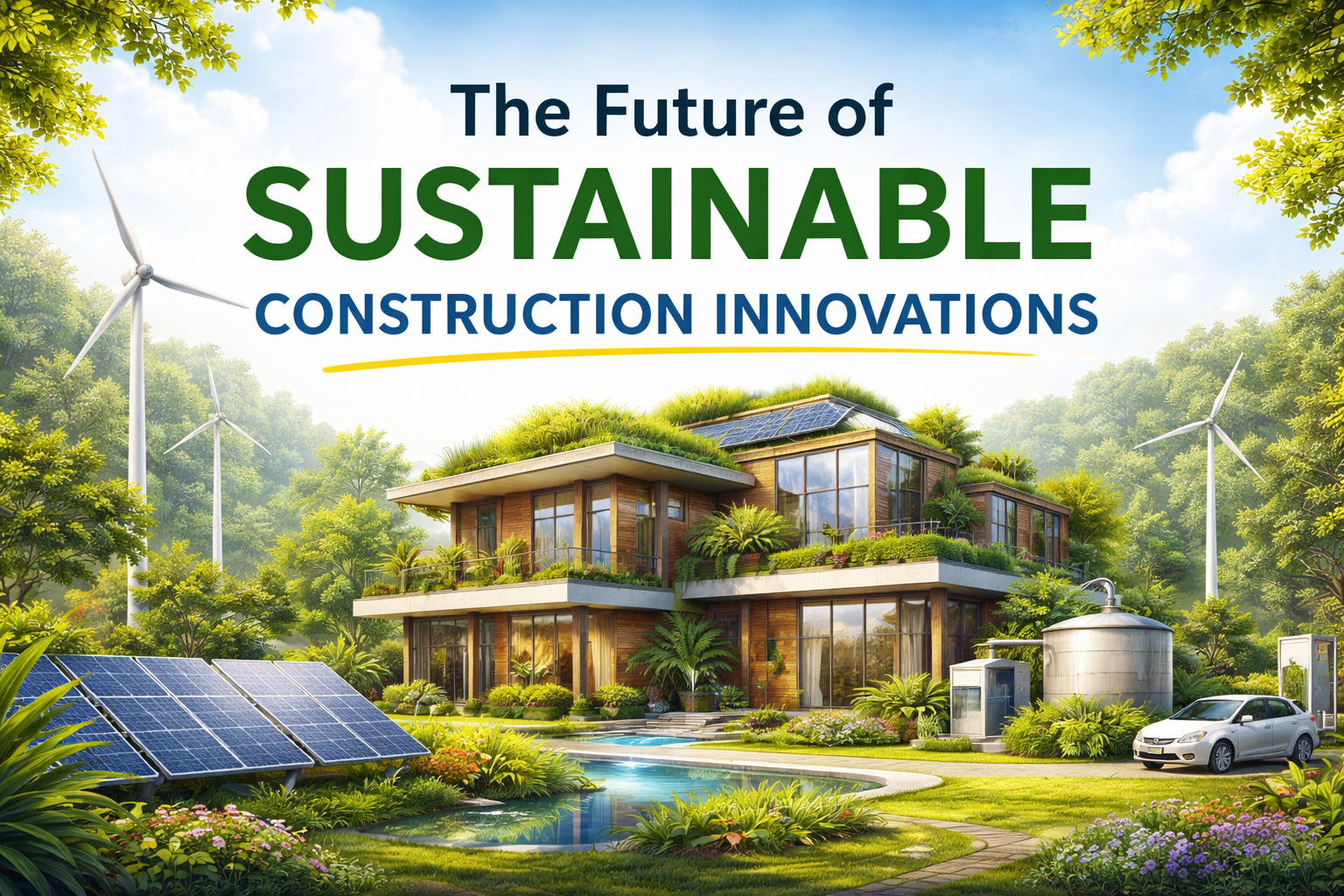
The construction industry is undergoing a powerful transformation. With growing environmental concerns and the need for energy efficiency, sustainable construction is no longer just a trend—it’s the future. From eco-friendly materials to smart technologies, innovations are reshaping how we design, build, and live in our spaces.
In this blog, we explore the latest advancements in sustainable construction and how they are paving the way for a greener, smarter future.
What is Sustainable Construction?
Sustainable construction refers to building practices that minimize environmental impact while maximizing efficiency and durability. It focuses on:
- Reducing waste and pollution
- Using eco-friendly materials
- Improving energy efficiency
- Enhancing indoor environmental quality
The goal is to create structures that are not only functional and beautiful but also environmentally responsible.
Why Sustainable Construction Matters
The construction sector is one of the largest contributors to global carbon emissions. Traditional building methods consume massive amounts of natural resources and energy.
Key Benefits:
- Lower energy consumption
- Reduced carbon footprint
- Cost savings in the long run
- Healthier living environments
- Increased property value
As awareness grows, homeowners and developers are actively choosing sustainable solutions.
Top Sustainable Construction Innovations
1. Green Building Materials
Modern construction is shifting towards eco-friendly materials such as:
- Recycled steel
- Bamboo
- Fly ash concrete
- Hempcrete
These materials are durable, renewable, and significantly reduce environmental impact.
2. Energy-Efficient Designs
Architects are now focusing on designs that reduce energy consumption.
Examples include:
- Passive solar design
- Natural ventilation systems
- Insulated walls and roofs
These designs help maintain indoor temperature, reducing the need for artificial heating and cooling.
3. Smart Home Technology
Technology plays a major role in sustainable living.
Smart features include:
- Automated lighting systems
- Smart thermostats
- Energy monitoring devices
These systems optimize energy usage and provide greater control over your home.
4. Solar Power Integration
Solar energy is one of the most popular sustainable solutions today.
Benefits:
- Reduces electricity bills
- Decreases reliance on fossil fuels
- Low maintenance cost
Installing solar panels is becoming more affordable and widely accessible.
5. Water Conservation Systems
Water scarcity is a growing concern, making conservation essential.
Innovations include:
- Rainwater harvesting
- Greywater recycling
- Low-flow fixtures
These systems help reduce water wastage and promote sustainable usage.
6. Prefabrication and Modular Construction
Prefabricated construction involves assembling building components off-site and installing them on-site.
Advantages:
- Reduced construction waste
- Faster project completion
- Lower labor costs
This method is efficient, cost-effective, and environmentally friendly.
7. Green Roofs and Vertical Gardens
Urban areas are adopting green roofs and vertical gardens to improve sustainability.
Benefits:
- Improved air quality
- Better insulation
- Reduced urban heat effect
They also enhance the aesthetic appeal of buildings.
Challenges in Sustainable Construction
Despite its benefits, sustainable construction faces certain challenges:
- Higher initial costs
- Limited awareness
- Lack of skilled professionals
- Availability of materials
However, with technological advancements and government support, these challenges are gradually being addressed.
The Future Outlook
The future of construction is undoubtedly green. Innovations will continue to evolve, making sustainable building practices more accessible and affordable.
Emerging trends include:
- Net-zero energy buildings
- 3D-printed construction
- AI-driven design optimization
- Carbon-neutral materials
As these technologies develop, sustainable homes will become the standard rather than the exception.
Conclusion
Sustainable construction is not just about protecting the environment—it’s about creating smarter, healthier, and more efficient living spaces. By embracing these innovations, we can build a future that balances progress with responsibility.
Whether you’re planning to build a new home or upgrade an existing one, adopting sustainable practices is a step towards a better tomorrow.
Ready to build a future-proof, eco-friendly home? Ecovon specializes in sustainable building solutions that combine innovation, quality, and style. From modern green designs to smart home integrations, we help you create spaces that are both beautiful and environmentally responsible.
👉 Contact Ecovon today and take the first step toward building a smarter, greener future!